Timber vs. 2-pac: choosing cabinetry that lasts
How each finish wears in a busy family kitchen.
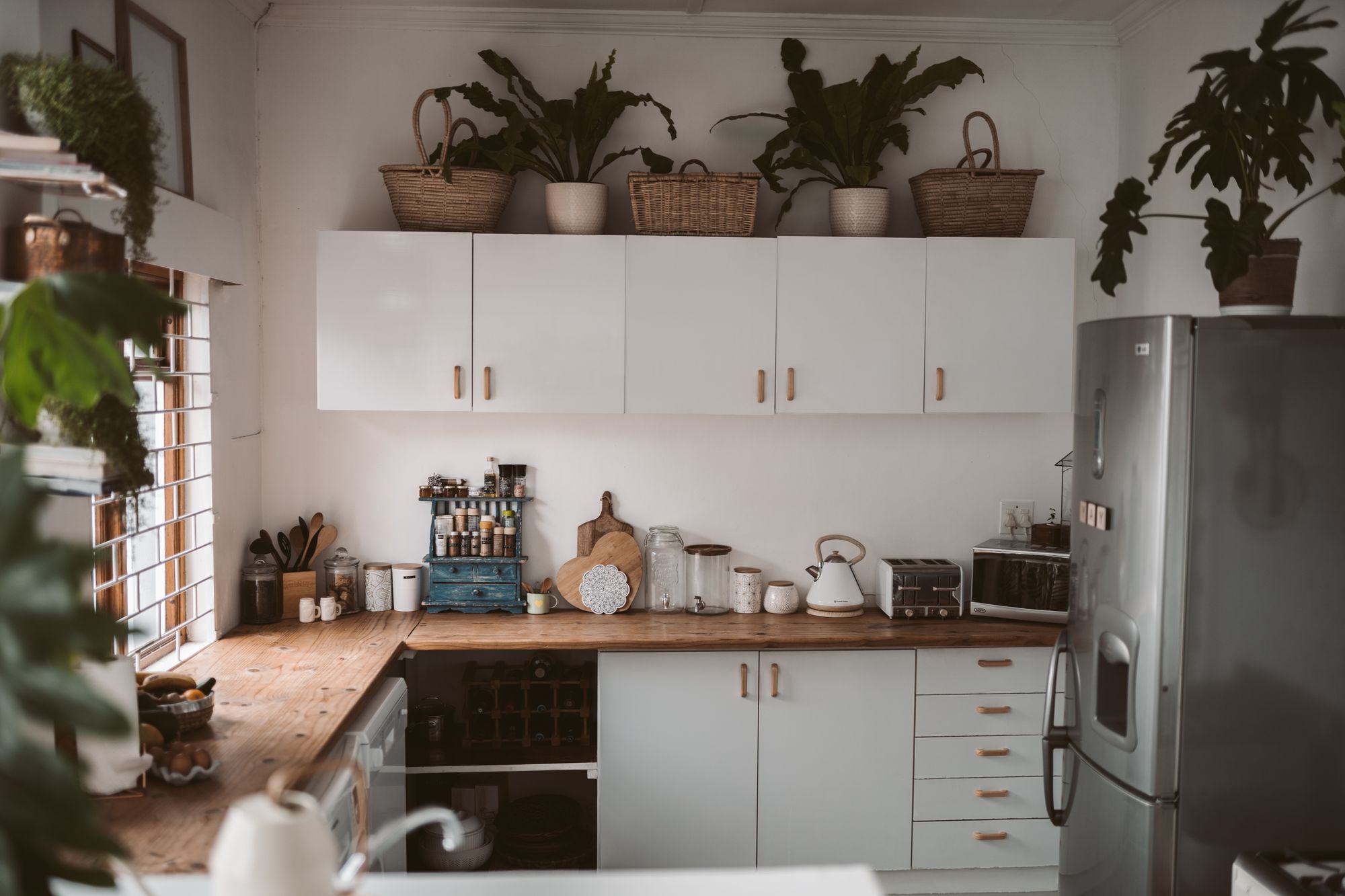
Every week someone stands in our workshop holding a timber sample in one hand and a 2-pac sample in the other, trying to picture ten years of family life. Both are good choices. They just age differently, and it helps to know how before you decide.
What each one actually is
2-pac is a two-part polyurethane paint, sprayed in several coats over MDF. It gives you a smooth, seamless finish in almost any colour, in matt, satin or gloss.
Timber comes in two forms. Veneer is a thin layer of real timber bonded to a stable board. Solid timber is exactly that, usually used for doors, drawer fronts, trims or a statement island.
How they wear in a busy kitchen
2-pac is tough on flat surfaces, but edges and corners can chip if they’re knocked by pots, prams or vacuum cleaners. Chips can be repaired by touching up or respraying, though matching an older colour exactly can be tricky.
Timber hides wear better. Small marks blend into the grain, and the surface picks up a gentle patina over time. Solid timber can be sanded and refinished. Veneer can be lightly cut back and recoated, but only so many times because the timber layer is thin.
Brisbane humidity
Timber moves as it takes on and loses moisture, and our wet summers make that more noticeable. That’s why we use veneer on stable boards for large panels and keep solid timber to frames and smaller parts. 2-pac on moisture-resistant MDF is very stable, which suits tall pantry doors and areas near the sink.
Side by side
| 2-pac | Timber veneer | Solid timber | |
|---|---|---|---|
| Look | Smooth, any colour | Natural grain, consistent | Natural grain, varied |
| Daily wear | Edges can chip | Hides small marks | Hides marks well |
| Repair | Touch up or respray | Light recoat | Sand and refinish |
| Relative cost | Mid | Mid to high | Highest |
Our usual recommendation
Many of our favourite kitchens mix the two. 2-pac for tall cabinets and overheads, where a calm, flat colour makes the room feel bigger. Timber for the island or the base cabinets, where hands and feet meet the joinery and a bit of character helps.
If budget is tight, a good-quality laminate is worth considering for internal carcasses and less visible areas, so you can spend more on the doors people actually see and touch.
Caring for each finish
Both finishes are easy to live with if you look after them from day one.
- 2-pac: wipe with a soft damp cloth and mild detergent. Avoid abrasive pads and harsh cleaners, which dull the surface. Report chips early so they can be touched up before moisture gets in.
- Timber: wipe spills promptly, especially around the sink and dishwasher. Oiled finishes benefit from a light re-oil every year or two. Lacquered timber just needs a damp cloth.
- Both: run the rangehood when cooking and avoid hanging damp tea towels over doors, which can mark either finish over time.
Questions to ask any cabinetmaker
- What board is under the finish, and is it moisture resistant near the sink?
- How many coats of 2-pac, and is the edge sprayed or banded?
- What happens if a door chips in the first year?
- Which timber species and finish, and how should I care for it?
Come and see both finishes in the workshop. Samples are useful, but nothing beats opening a real drawer and running your hand along the edge.