Inside the workshop: a 4-metre walnut sideboard
From rough-sawn boards to final oil.
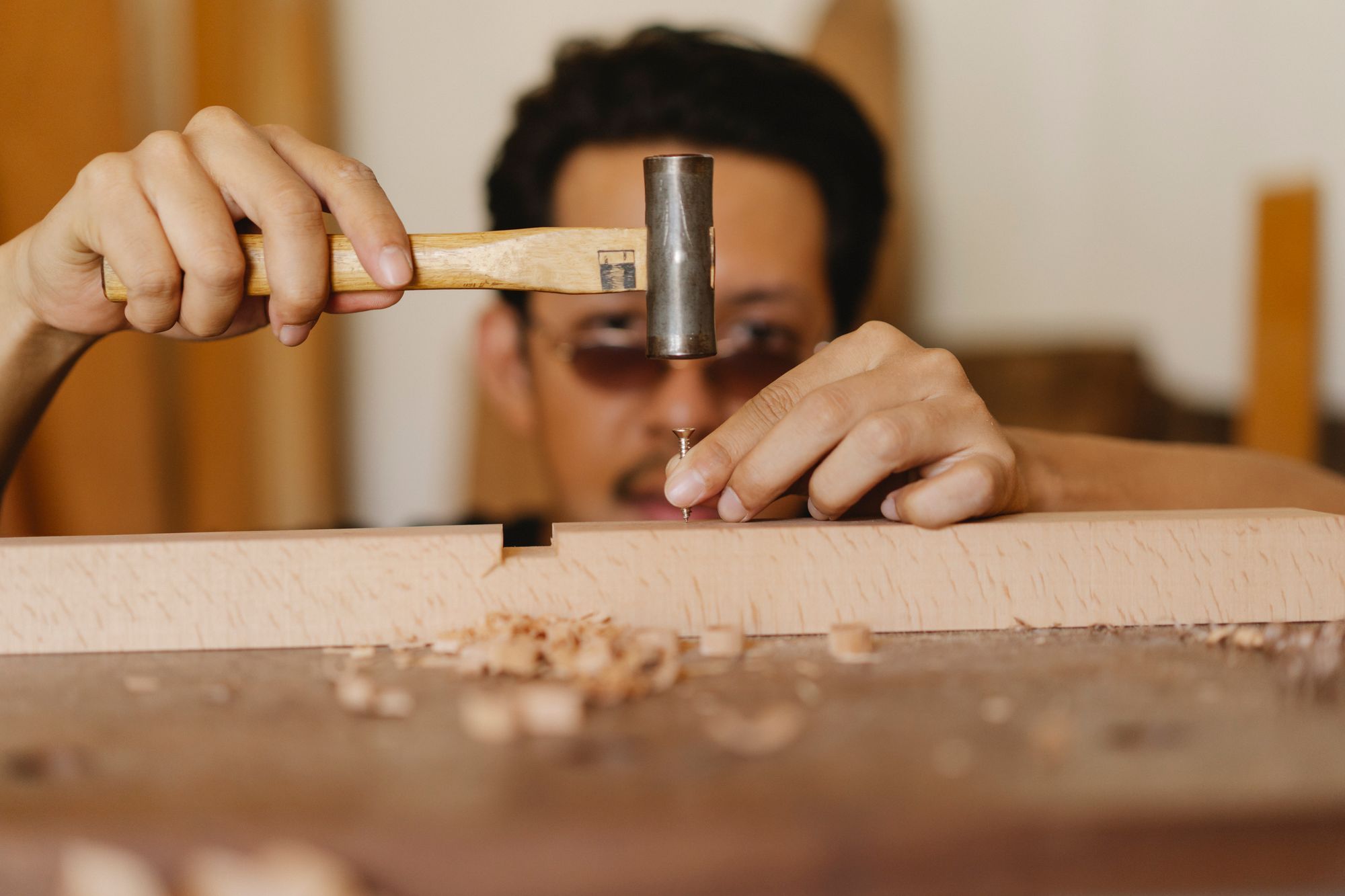
Most of what we build is fitted: kitchens, wardrobes, bookshelves. Every so often, someone asks for a piece of furniture. This year it was a four-metre sideboard in American black walnut, for a long dining room in a Wilston Queenslander. Here’s how it came together.
Starting with the boards
A piece this long starts at the timber yard. We hand-picked rough-sawn walnut boards, matching colour and grain so the top would read as one continuous surface. Walnut has creamy sapwood along its edges, and we decided early to keep a little of it on the drawer fronts as a subtle detail.
The boards then sat in the workshop for a couple of weeks to settle to our local conditions before we cut anything. Rushing this step is how furniture ends up cracking or twisting later.
Designing for movement
Solid timber expands and contracts across its width as humidity changes, and Brisbane’s humidity swings a lot through the year. A four-metre top made from solid boards will move noticeably from summer to winter.
So the top isn’t glued down. It’s held with timber buttons that sit in grooves and let it move. The back panels float in their frames rather than being fixed. These details are invisible once the piece is finished, but they’re the difference between furniture that lasts a lifetime and furniture that splits within a couple of years.
Joinery
The carcass is joined with mortise and tenons, and the drawers are hand-cut dovetails at the front and through dovetails at the back. The drawer bottoms are solid walnut, set in grooves so they can move too.
The four doors are frame-and-panel, with the panels resawn from a single board so the grain flows across the whole front. It took some careful planning to get enough clear timber for that, but it’s the detail people notice first.
Built in sections
Four metres won’t fit through most front doors, let alone round a Queenslander’s hallway. We built the sideboard as two cases joined invisibly on site, with a single top that we carried in through the French doors.
Finishing
We finished it with a hardwax oil, which soaks into the timber, brings out walnut’s depth and can be spot-repaired if it gets a scratch. A lacquer would have been more stain resistant, but harder to fix and less pleasant to touch. For a dining room piece that will collect marks over the years, we think repairability wins.
The numbers
- Length: 4 metres, in two cases with a single top
- Timber: American black walnut, with solid walnut drawer bottoms
- Joinery: mortise and tenon, hand-cut dovetails
- Finish: hardwax oil
- Workshop time: roughly six weeks
What it means for your joinery
The same principles go into every piece we make, from a window seat to a full kitchen: choose timber carefully, let it settle, allow it to move and choose finishes you can repair. If you’re thinking about a one-off piece or built-ins with real timber, we’d love to show you around the workshop.